
Last Updated on February 18, 2026 by Sharaj
If you’re struggling with rough cuts or limited tools in your workshop, the best bandsaw can make a huge difference. A quality band saw gives you smoother curves, straighter rip cuts, and far better control when working with timber. The right choice helps you handle detailed woodworking projects with accuracy and confidence, whether you’re just starting out or more experienced.
In this guide, we share honest reviews of the top band saws, helping you choose a reliable machine for serious woodworking.
Top Picks



Charnwood B350 14" Premium Bandsaw 1100W
A robust floor-standing bandsaw that brings professional features to a small trade or demanding home workshop. It pairs a powerful induction motor with excellent blade guidance for accurate, repeatable results.
If you're looking for a floor standing bandsaw that bridges the gap between hobby use and small workshop production, look no further. For a large contingent of serious woodworkers, this is the only saw you’ll need, offering the power and capacity to handle everything from fine curve cutting to heavy resawing work with ease. The Charnwood B350 from Charnwood delivers an impressive 225mm cutting depth and 340mm throat width, driven by a smooth 1100W induction motor with two selectable speeds for different materials.
The machine features a solid cast iron tilting table with rack-and-pinion adjustment from 0–45°, a heavy-duty blade guide system with bearings above and below the table, an integrated LED work light, and a multi-size dust extraction port for efficient chip control. In day-to-day use it tracks blades accurately under load, making it particularly strong for hardwood resawing and consistent curved cuts.
More specifications include support for blade widths from 6–25mm, an approximate weight of 76kg for excellent stability, and a comprehensive accessory set including rip fence, mitre fence, floor stand, British-made blade, and fitted UK plug.
Overall, if you want workshop-grade performance in a machine that still fits a serious home setup, the B350 stands out as a robust, accurate and highly capable bandsaw for demanding cutting tasks.
Lumberjack 9" Benchtop Bandsaw 300W
A great all-rounder for hobbyists who want decent capacity and useful accessories without spending a fortune. It balances build quality and features for workshop newcomers and experienced DIYers alike.
Purpose & who this suits
We see this as a practical benchtop bandsaw aimed at hobby woodworkers and light home-shop use. With a 300W motor and a 90mm cutting depth it’s well suited for furniture repair, small joinery tasks, veneering and pattern work where portability and included accessories matter.
Key features and hands-on impressions
On first use we noticed the robust metal frame and metal doors — a welcome step up from the plastic-bodied competitors. The machine arrives with a number of useful accessories which help you get cutting quickly:
The table and fence square up well after a bit of fine tuning; once set the saw cuts cleanly for its class. We found the sound level pleasantly low and appreciated the dust box and the extraction port when doing longer runs.
Limitations and best practice
The table is functional but not as rigid as heavier machines — if you intend to use thicker hardwoods regularly you may want to add a heavier top or clamp the unit to a workbench. The blade guard and bearing covers improve safety but can make sighting a line tricky when you drop the guard very close to the work. Expect to spend a little time on setup (blade tracking, bearings and table alignment) to get the best accuracy.
Bottom line & key specifications
For the money, this is a very capable hobby bandsaw that punches above its price bracket thanks to metal construction and useful accessories. We recommend it for serious hobbyists, small workshop owners and anyone who wants a portable yet feature-rich benchtop bandsaw.
Axminster AW1400B Bench Bandsaw 230V
A well-built benchtop bandsaw that offers excellent value for hobbyists and small workshops. It nails accuracy after a careful setup and benefits from features usually found on pricier machines.
Purpose & who this suits
We see the AW1400B as an ideal entry-level to mid-tier bandsaw for hobbyists and small professional shops who need a stable, accurate machine that’s portable enough to move when required. It’s especially good for users wanting more control over blade choice and guide set-up.
Hands-on highlights
Setting up the machine takes a little time but pays off with accurate results. Notable practical features include:
Once we’d fitted the supplied 6mm blade and set the guides, the saw produced consistent cuts and handled 50mm oak with no trouble in routine passes. The rack-and-pinion adjustment for the top guide makes repeatable setup straightforward.
Limitations and practical advice
The 80mm cutting depth limits the size of workpieces compared with larger floor-standing saws. The optional mitre fence is worth buying if you plan angled work frequently. For best performance always use a matched blade width and tooth pattern for the job at hand.
Bottom line & key specifications
This is a substantial benchtop bandsaw that feels like a step up from budget models; we recommend it for serious hobbyists and small shop use.
Scheppach HBS30 350W Benchtop Bandsaw
Supplied with three blades and a mitre gauge, this is an ideal starter bandsaw for crafters and hobbyists. It balances price, accessories and a usable 80 mm cut height for small projects.
Purpose & who this suits
We consider the HBS30 to be a strong choice for hobby woodworkers, model makers and DIYers buying their first dedicated bandsaw. The included blades make it easy to cover a few different tasks from coarse ripping to finer curved work straight away.
What we liked in use
The machine offers a sensible set of features for the price. Practical highlights include:
In everyday use it feels solid for the class and cuts with reasonable accuracy once tracking and tension are set correctly. The dust port helps keep the area tidy during longer cuts.
Limitations and tips
Some users find the pulley access fiddly because it uses hex keys rather than tool-free knobs — not a major drawback but something to be aware of if you change blades frequently. Also, the instructions can be a little sparse in places; we recommend watching a setup video if you’re new to bandsaws.
Bottom line & key specifications
This Scheppach is an effective, value-packed starter bandsaw that will suit most hobby needs and light workshop tasks.
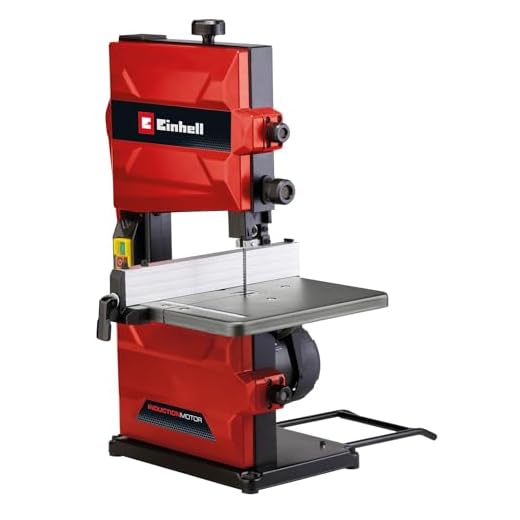
Einhell TC-SB 200/1 200mm Bench Bandsaw
This compact bandsaw is excellent for makers with limited space who still need accurate small cuts. It’s portable, easy to store and well suited to fine hobby work and boatbuilding parts.
Purpose & who this suits
We recommend this model for hobbyists, model makers and anyone with a small workshop or a need for a portable machine. Its compact footprint makes it easy to tuck away after use, while the 250W motor gives reasonable cutting capability for its size.
Features and what we liked
On the bench the machine is light and straightforward to use. Key practical points we found useful include:
The saw will take fine veneers and small curves very well; we were impressed by how quietly it runs and how quickly small tasks are completed. The included table and fence provide adequate support for lightweight workpieces.
Limitations and how to get best results
The small pressed-steel table flexes compared with heavier cast tables — for better long-term accuracy we recommend upgrading to a machined aluminium top if you plan many precision cuts. Blade tension and tracking adjustments need patience initially; once set they stay true for routine work.
Bottom line & key specifications
In short, this is a capable compact bandsaw for light-to-medium hobby tasks where space is at a premium. It's a solid choice if you want portability and a practical entry-level cutting tool.
Record Power BS250 Benchtop Bandsaw
A straightforward, well-built benchtop bandsaw that does the basics exceptionally well. It’s quiet in operation and built for hobbyists who prefer a sturdy, fuss-free machine.
Purpose & who this suits
We view the Record Power BS250 as a practical machine for hobbyists and entry-level users who want a durable, reliable bandsaw without lots of bells and whistles. It’s particularly well suited to those who prefer a simple, solid tool that runs quietly.
Hands-on experience
On the bench the BS250 feels weighty and well finished. Notable points from our time with it include:
Users report that the saw performs very well for both softwood and hardwood in hobby contexts, and that the five-year guarantee offered by the brand is reassuring for home workshop users.
Limitations and practical notes
Setup and blade alignment can demand a bit of patience, especially if you’re new to bandsaws. The machine arrives with fewer accessories than some competitors, so you may want to budget for extra blades or a better fence depending on projects.
Bottom line & key specifications
This is a dependable benchtop bandsaw for people who value build quality and quiet operation over flashy extras.
Final Thoughts
For busy small trades and demanding home workshops we recommend the Charnwood B350 14" Premium Bandsaw (1100W). It's our top pick for shop‑level performance. Why? Because it pairs a stout induction motor with rock‑steady blade guidance and a floor‑standing frame. That combination gives consistent, accurate cuts and plenty of margin for resawing and ripping larger stock. Ideal for: cabinetmakers, small joinery shops and serious weekenders who work with larger timber. Strengths: induction motor for quiet, long life; solid blade guides for accuracy; generous throat and resaw capacity for larger pieces; good build and dust management for a workshop environment.
If you want great value for a bench machine, choose the Lumberjack 9" Benchtop Bandsaw (300W). It’s our top budget/benchtop pick. It balances decent capacity with helpful accessories and a user‑friendly setup, so hobbyists and DIYers get more done without faff. Ideal for: hobbyists, model makers, and anyone with limited space who still wants proper capability. Strengths: compact footprint, useful accessory pack, good balance of build quality and price, straightforward adjustments for everyday projects.
Key specifications (at a glance):
If you need an all‑round benchtop workhorse with excellent accuracy, consider the Axminster AW1400B. For a ready‑to‑go starter with accessories, the Scheppach HBS30 is a sensible low‑cost option (it even comes with three blades and a mitre gauge). We’ve called out the best and the best value — both will give you the dependability we look for in 2026.
FAQ
Think about stock size and workshop space. Floor‑standing saws like the Charnwood B350 give bigger resaw capacity and greater stability for long or heavy timber. Benchtop models — Lumberjack 9", Scheppach HBS30, Einhell TC‑SB 200/1 — are compact, cheaper and perfect for small stock, trims and curved cutting. If you regularly resaw boards or work with wide stock, go floor‑standing. If space and portability matter more, choose benchtop.
Motor power should match the work. For general hobby use and small parts, 200–400W (Lumberjack 300W, Einhell, Scheppach levels) is fine. For regular resawing, thicker hardwoods or pro use, aim for 1kW+ — the Charnwood's 1100W induction motor handles heavier cuts more reliably and stays cool under load.
Accuracy comes from a stiff frame, good blade guidance and a solid fence. The Charnwood B350 and Axminster AW1400B are engineered for repeatability — they track well and the guidance systems keep the blade true. Careful setup (wheel alignment, correct blade tension and good guide adjustment) matters more than raw power.
Match tooth pitch (TPI) and blade width to the cut. Use wider blades (6–10mm) for resawing and straight ripping; narrow blades (3–6mm) for tight curves. Lower TPI (3–6) suits rip cuts and thicker wood; higher TPI (10–24) suits thin stock and finer finish. Keep spare blades handy — Scheppach includes three, which is great for beginners.
Very important. Good extraction keeps the table clear and prevents fine dust from gumming up guides and bearings. Floor machines normally have better dust ports; benchtop saws often need a small shop‑vac with a suitable adapter. We always run extraction close to the blade and empty filters regularly.
Regular maintenance wins. Keep wheels and tyres clean, check wheel tracking, maintain correct blade tension and replace worn guides. Grease pivot points and tighten any loose fasteners. Replace blades at the first sign of wandering or excessive burn. A little calibration after moving the machine goes a long way.
Yes: use a suitably rated push stick for small pieces, always fit a blade guard above the work, wear eye and respiratory protection, and keep hands clear of the blade path. Turn off and unplug before changing blades or adjusting guides. We also recommend riving knives or anti‑kickback techniques when resawing tall stock.
Spend on a solid fence (quick to align and locks true), a decent mitre gauge, and quality blades covering a couple of tooth pitches. A mobile base for floor machines, a dust hood or hood adapter for benchtops, and a reliable set of blade guides (ceramic or precision bearings) are good upgrades. For heavy resawing, a fence with a tall auxiliary support helps feed long boards safely.
